

The Lowell Mill Girls: Pioneers of Labor Rights

In the 1830s, the textile mills of Lowell, Massachusetts, hummed with the sound of thousands of young women at work. They were the first generation of American factory workers—mostly single girls aged 15 to 30, recruited from New England farms with promises of steady wages, supervised boarding houses, and cultural enrichment. What they found was long hours, strict rules, and wages that could be slashed at any time. When the corporations cut pay in 1834 and 1836, these women did something remarkable: they walked out. They organized, petitioned, published their own literary magazine, and struck—not once, but repeatedly. Their actions were among the earliest organized labor protests in U.S. history, and they laid the groundwork for the modern labor movement.
Yet the Lowell Mill Girls are often overlooked. Labor history tends to spotlight male-dominated unions of the late 19th and early 20th centuries, while the story of these young women—many of whom were literate, articulate, and fiercely independent—has faded into footnotes. Their struggle is essential knowledge for every American because it reveals how economic justice begins with ordinary workers claiming their worth, even when the system is stacked against them. In an era of gig economies, wage stagnation, and corporate dominance, their example remains urgent: fair play is not granted; it is demanded, peacefully and persistently.
This article examines the rise of the Lowell mills, the daily lives of the Mill Girls, the key strikes and publications that defined their resistance, the broader historical context, the reasons their story was sidelined, and the lessons they offer today.
The Birth of the Lowell System
The Lowell mills were born from the vision of Francis Cabot Lowell, a Boston merchant who visited British textile factories in 1810–1812 and memorized their designs. Upon returning, he and his partners built the first integrated cotton mill in Waltham in 1814, then expanded to Lowell in 1822. By the 1830s, Lowell was the largest industrial city in America, with 40 mills employing over 8,000 workers—mostly women.
The “Lowell System” was revolutionary in its time. To attract respectable young women from rural farms, the corporations offered:
High wages (compared to farm labor or domestic service)
Company-owned boarding houses supervised by matrons
Mandatory church attendance
Access to lectures, libraries, and lyceum courses
A ban on alcohol and strict curfews
This paternalistic model was designed to reassure anxious parents that their daughters would remain virtuous in the city. It worked: by 1836, Lowell’s workforce was 85% female, with most between 15 and 25. They were literate—many had attended district schools—and came from middle-class farming families. The corporations marketed the mills as temporary stepping stones: earn money, gain independence, then return home to marry.
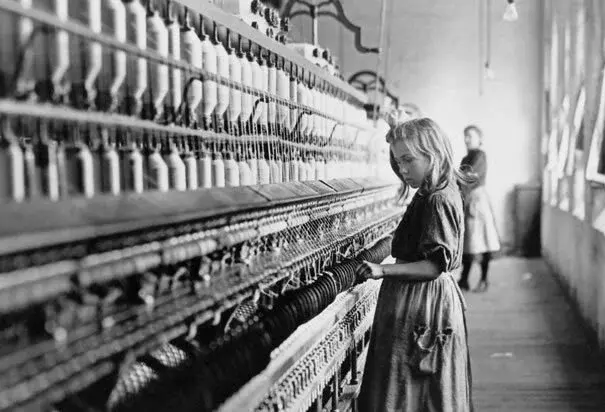
For a few years, the system delivered. Wages were higher than alternatives, and the cultural offerings—lectures by Ralph Waldo Emerson, access to the Lowell Offering—made the mills seem progressive. But the reality was grueling: 12–14 hour days, six days a week, in hot, noisy rooms filled with cotton dust. Workers stood at looms and spinning frames, breathing lint that caused respiratory illness. Injuries were common. And wages, while initially good, were vulnerable to cuts.
Daily Life and Growing Discontent
The Mill Girls lived in company boarding houses, four to eight per room, paying $1.25 per week for room and board—deducted from wages of about $2–$3 per week. Rules were strict: lights out at 10 p.m., no visitors, mandatory church. Yet the women formed close bonds, sharing books, writing poetry, and discussing ideas. They were not passive; many used their wages to support families, pay for siblings’ education, or save for their own futures.
Discontent grew in the mid-1830s as corporations faced competition from southern mills and British imports. In 1834, wages were cut 15–20%. The women responded with the first major strike in U.S. history: over 800 walked out, marching through the streets with banners reading “Union is Power.” The strike lasted only a few days—management held firm, and most returned—but it shocked the nation. Newspapers called the women “Amazons” and “unsexed females.” The corporations blacklisted leaders, but the action demonstrated collective power.
In 1836, another wage cut sparked a larger walkout—up to 1,500 women. This time they formed the Factory Girls’ Association, drafted a constitution, and published resolutions demanding fair treatment. Again, the strike collapsed after a week, but it forced concessions and kept the issue alive.

The Lowell Offering: Voices from the Mills
The most enduring legacy of the Mill Girls is the Lowell Offering (1840–1845), a literary magazine written, edited, and published entirely by the women themselves. Edited by Harriet Farley and Harriott Curtis, it featured essays, poetry, fiction, and sketches on factory life, religion, education, and women’s rights.
The Offering was not overtly radical; it avoided direct criticism of the corporations to protect contributors’ jobs. Yet it was subversive in its very existence: young working women claiming intellectual space in a society that viewed them as mere labor. Pieces like Harriet Hanson Robinson’s “Early Factory Labor in New England” (later expanded in her memoir) described the mills’ harsh realities while defending the women’s dignity.
The magazine reached thousands, including abroad, and earned praise from figures like Charles Dickens (who visited Lowell in 1842). It showed the world that factory girls were not degraded; they were thoughtful, articulate, and capable. When critics accused them of being “slaves,” the Offering replied with pride and wit.
Historical Context: Industrialization and Gender in Antebellum America
The Lowell mills were America’s first large-scale industrial experiment. They arose during the Market Revolution, when factories replaced household production, and capitalism accelerated. Women entered the workforce in unprecedented numbers because they could be paid less than men and were seen as more “docile.” Yet the Mill Girls defied that stereotype. Their strikes predate the male-dominated trade unions of the 1850s and 1860s, proving that labor activism began with women.
Their actions occurred amid broader reform movements: temperance, abolition, women’s rights. Some Mill Girls attended lectures by Frederick Douglass and William Lloyd Garrison; others joined the Lowell Female Labor Reform Association (1844–1848), which lobbied for the 10-hour day and published The Voice of Industry.
The corporations eventually won. By the 1840s, Irish immigrants replaced Yankee women, wages fell, and conditions worsened. The 10-hour law passed in 1874—too late for the Mill Girls.
Why Overlooked? And the Enduring Contrasts
Labor history often begins with the Knights of Labor or the AFL, sidelining earlier female activism. The Mill Girls’ story was also eclipsed by class and gender biases: they were young, female, temporary workers—not the skilled male artisans who later defined unions. Their strikes were short and “failed,” so they were dismissed as precursors rather than pioneers.
Yet their efforts were foundational. They demonstrated collective action, published their own voices, and demanded dignity in work. The 10-hour movement they helped spark became a national cause. Their legacy influenced later labor leaders, including women in the garment trades and the ILGWU.
The contrast is stark: the Lowell mills promised opportunity and moral uplift, but delivered exploitation. The founders of the system believed they were civilizing the workforce; the women proved they were capable of self-organization. This tension—between corporate paternalism and worker autonomy—mirrors modern gig-economy platforms that promise flexibility while eroding wages and security.

Lessons for Today: Economic Justice and Worker Agency
The Lowell Mill Girls teach that economic justice begins with everyday workers claiming their worth. In the 1830s, they faced wage cuts, long hours, and corporate arrogance. They responded by organizing, publishing, and striking—peacefully asserting their rights. Their actions remind us that fair play is not granted; it is demanded.
Today, in an era of gig work, stagnant wages, and corporate dominance, their example is urgent. Platforms like Uber and DoorDash classify workers as “independent contractors” to avoid benefits and minimum wage. Amazon warehouse employees face quotas and surveillance. The Mill Girls’ strikes show that collective action—unions, walkouts, public pressure—can force change, even when the odds are long.
They also teach that worker agency is not gendered or generational. Young women, often dismissed as temporary or docile, proved otherwise. Modern workers—many young, many female, many of color—must likewise reject narratives that diminish their power.
Finally, their story underscores the value of voice. The Lowell Offering gave them a platform to speak for themselves. Today, social media, podcasts, and independent media offer similar tools. The lesson is simple: tell your own story, or someone else will tell it for you.
Conclusion: Reclaiming the Mill Girls’ Legacy
The Lowell Mill Girls were not revolutionaries in the political sense; they were workers who demanded dignity. They walked out, published, organized, and lobbied—not for utopia, but for fairness. Their efforts were imperfect, short-lived, and ultimately displaced by new waves of labor, yet they planted seeds that grew into the modern labor movement.
In remembering them, we do more than honor the past; we reclaim a fuller American narrative. The founding promise of opportunity was tested early in the mills, and the women who worked there proved that ordinary citizens can challenge power without chaos. Their takeaway endures: economic justice begins with workers who refuse to be exploited, who speak up, stand together, and demand what is right.
Every American should know their story—not as a quaint tale of “mill girls,” but as proof that agency, resilience, and collective action have always been the true engines of progress.
Primary Sources
Lowell Offering (1840–1845) – Full issues digitized at University of Massachusetts Lowell Libraries.
Harriet Hanson Robinson, Loom and Spindle: Life Among the Early Mill Girls (1898) – Memoir and eyewitness account (Archive.org).
The Voice of Industry (1844–1848) – Labor newspaper published by the Lowell Female Labor Reform Association.
Secondary Sources
Thomas Dublin, Women at Work: The Transformation of Work and Community in Lowell, Massachusetts, 1826–1860 (1979) – Foundational study on the mills and workers.
Alice Kessler-Harris, Out to Work: A History of Wage-Earning Women in the United States (1982) – Places Mill Girls in broader women’s labor history.
Teresa Murphy, Ten Hours’ Labor: Religion, Reform, and Gender in Early New England (1992) – Focuses on cultural and religious dimensions.
Further Reading
Benita Eisler, The Lowell Offering: Writings by New England Mill Women (1840–1845) (1977) – Anthology of primary writings.
Judith A. Ranta, The Life and Writings of Betsey Chamberlain: Native American Mill Worker (2003) – Includes perspectives from Native and working-class women in Lowell.


Comments