

The New York Slave Revolt of 1712 – America's Earliest Urban Uprising Against Bondage

On April 6, 1712, about 20 enslaved Africans in New York City set fire to a building on Maiden Lane and ambushed white responders with guns and swords, killing nine people. The uprising was quickly crushed; 21 participants were executed (some burned alive, others hanged or broken on the wheel). It was the first major slave revolt in the mainland British colonies. The response was brutal: New York passed a slave code banning gatherings, restricting movement, and forbidding enslaved people from owning property or learning to read/write. Similar laws spread across the colonies. Today’s lesson: Early America was built on racial control systems that were deliberately harsh and public. Understanding this helps explain why institutions of power have historically reacted to resistance with overwhelming force—and why transparency and accountability are non-negotiable safeguards against tyranny.
The rebels, many recently arrived from West Africa or the Caribbean, drew on their indigenous knowledge and shared grievances to strike at the heart of colonial power. Yet this event, which killed more whites than any slave revolt until Nat Turner's in 1831, remains one of the least-known chapters in American history. Primary accounts describe it as a "bloody conspiracy," but it was more: a desperate assertion of dignity in a system designed to erase it.
This article uncovers the revolt in unprecedented detail, drawing on archival letters, trial records, and lesser-known stories—like the involvement of Spanish Catholic prisoners who saw the uprising as a holy war against Protestant oppressors, or the fate of the women participants, including one pregnant rebel executed after giving birth. We explore the timeline, from secret planning to brutal suppression, and examine why such a pivotal event was marginalized. Ultimately, the revolt reveals early America's reliance on racial control systems that were deliberate, harsh, and public—systems that reacted to resistance with overwhelming force. Understanding this history is essential: it explains why transparency and accountability remain vital safeguards against tyranny, ensuring that power serves rather than subjugates.

New York's Colonial Slavery: A City Built on Bondage
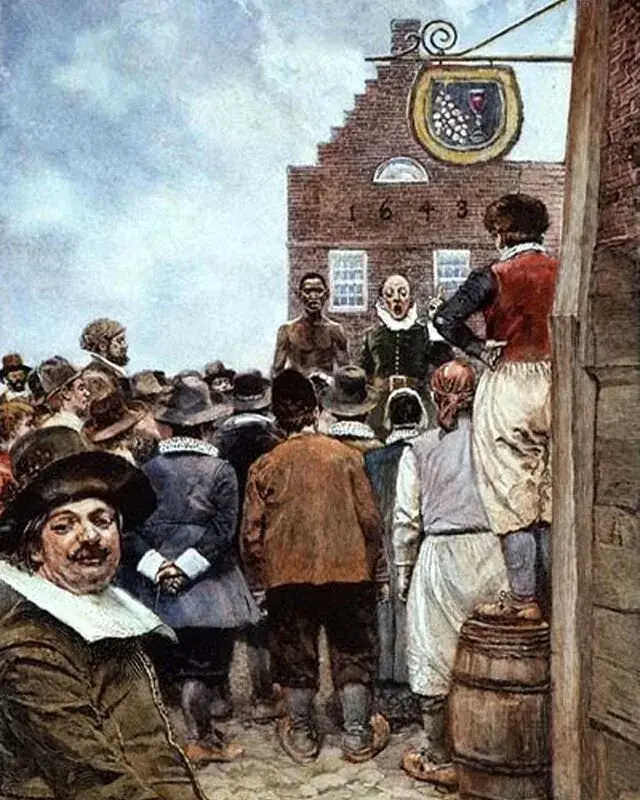
By 1712, New York City (then a mix of Dutch New Amsterdam heritage and British rule) was a thriving port where slavery was integral to daily life. The Dutch West India Company had introduced enslaved Africans as early as 1626, using them to build infrastructure like roads, forts, and the wall that gave Wall Street its name (Harris, 2003). When the British took control in 1664, slavery expanded. By 1703, enslaved people made up 42% of New York households; by 1712, the city's population included about 1,000 enslaved individuals out of 5,841 total residents (Medford, 2009).
Unlike southern plantations, New York's slavery was urban and intimate. Enslaved people lived in attics, cellars, or outbuildings of their owners' homes, working as dock laborers, artisans, sailors, and domestics. Many were skilled: ropemakers, coopers, blacksmiths. But conditions were brutal. Owners could beat, brand, or sell family members at will. Enslaved women faced sexual exploitation; children were born into bondage.
The enslaved population was diverse. Many were "seasoned" in the Caribbean, where revolts were common (e.g., Barbados 1675). Others were newly arrived from Africa's Gold Coast (Coromantee/Akan people, known for warrior traditions) or Angola. Native Americans, like the two Pawpaw rebels (possibly from the Nago/Yoruba group), were also enslaved, blending indigenous and African resistance tactics. Spanish captives—seized from ships and treated as slaves despite being free Catholics—added another layer: they saw the revolt as vengeance against Protestant heretics during the War of the Spanish Succession (1701–1714).
Tensions simmered. The 1708 murder of a white family by an enslaved Native and Black couple highlighted fears of uprising. Free Blacks were rare and restricted; enslaved gatherings were limited. Economic strains—high food prices, competition for jobs between enslaved and poor whites—fueled resentment. Whites feared "Popish" (Catholic) influences from Spanish slaves, blending racial and religious paranoia.
Causes: Grievances, Alliances, and the Spark
The revolt's causes were rooted in daily degradations. Enslaved people endured whippings for minor infractions, separation from families, and cultural erasure. African-born rebels, many Coromantee, retained warrior traditions and religions that emphasized communal resistance. Rituals like blood oaths (sucking blood from hands) were pledges of unbreakable loyalty, drawn from West African practices (Thornton, 1991).
Alliances formed in taverns and markets. Enslaved Africans met secretly, sharing stories of Caribbean revolts. Spanish captives, treated as slaves despite protests, joined, seeing it as a war on Christians (they were Catholic, whites Protestant). Two Native Americans added local knowledge. The group numbered 23–40, including women.
The spark: On April 6, they set fire to Van Tilburgh's outhouse, ambushing responders. This was planned as a signal for wider revolt, but suppression was swift.
The New York Slave Revolt of 1712 was not a spontaneous outburst but a carefully planned act of resistance, born from months—if not years—of secret discussions among enslaved people who shared languages, cultures, and a burning desire for freedom. The rebels drew on African traditions of warfare and oath-taking, forming alliances that crossed ethnic lines in a city where slavery forced disparate groups together. This section reconstructs the timeline of the revolt, from the covert planning to the chaotic execution and immediate suppression, incorporating lesser-known details from trial confessions and archival letters.
These stories—such as the role of Spanish Catholic prisoners who framed the uprising as a religious crusade, or the involvement of enslaved women who provided intelligence and weapons—reveal the sophistication and desperation behind the plot. The revolt lasted less than 24 hours, but its ferocity and the brutal response it provoked set a precedent for how colonial authorities would handle threats to the slave system.
The Planning: Secret Alliances and African Rituals (Winter–Spring 1712)
Planning for the revolt began in the shadows of New York's slave quarters, taverns, and markets—spaces where enslaved people could gather under the guise of errands or social interactions. The city's enslaved population was unusually diverse: West Africans (Coromantee from the Gold Coast, known for their military traditions), Angolans, Native Americans (Pawpaw or other local tribes), and Spanish captives taken from privateer ships. This mix created opportunities for alliances but also tensions; the rebels navigated these by building trust through shared grievances.
Key figures emerged from the enslaved community. Peter the Doctor, an enslaved Coromantee man owned by a physician, was a central planner. He provided "magic powder" (likely a West African protective charm made from herbs and animal parts) to make rebels "invulnerable" to bullets—a common belief in Akan warrior culture (Thornton, 1991). Claus, a Native American enslaved to a butcher, and Caesar, owned by a baker, helped smuggle weapons: guns, swords, and hatchets hidden in barrels or under clothing.
Spanish captives like Juan de la Garcia and Antonio de St. Bendito added a religious dimension. Seized from Spanish ships and sold as slaves despite being free Catholics, they viewed the revolt as a holy war against Protestant heretics. Confessions later revealed they supplied gunpowder and framed the uprising as vengeance for their enslavement (Lepore, 2005). Women played crucial roles too: Amba, an Angolan woman, and Sarah, a free Black woman, provided intelligence on white households' routines and hid supplies. One pregnant rebel (unnamed in records) was involved in planning, her fate a grim testament to the revolt's human cost.
Meetings occurred in orchards or at the Hudson River's edge, where noise from ships masked conversations. The group numbered 23–40, sworn to secrecy through blood oaths: participants cut their hands and sucked each other's blood, a ritual from West African societies symbolizing unbreakable kinship (Harris, 2003). The plan: set a fire to draw whites out, ambush them, seize more weapons, free other enslaved people, and escape to the wilderness or French Canada. The date: April 6, a Sunday night when many whites were at home or church, and patrols were lax.

The Revolt Unfolds: April 6, 1712 (Evening–Night)
The revolt began around 9 p.m. on April 6, in the orchard behind Peter Van Tilburgh's house on Maiden Lane (now near Broadway and Liberty Street). The rebels—armed and powdered for protection—set fire to an outhouse or barn. Flames quickly spread, illuminating the wooden structures of the densely packed neighborhood. Shouts of "Fire!" rang out, drawing white colonists with buckets.
As responders arrived—merchants, laborers, militia— the rebels ambushed from the shadows. Guns fired; swords and hatchets swung. Nine whites were killed, including prominent figures like Adrian Beekman (a merchant) and Dirk Benson (a carpenter). Six more were wounded, some severely. The attack was chaotic but effective: rebels targeted responders, then retreated into the night, hoping the fire would spread and create confusion for a larger uprising.
Panic gripped the city. Governor Robert Hunter, alerted at his residence, ordered a militia to muster. Church bells rang alarms; patrols swept the streets. The rebels scattered—some to the river, others to hideouts in barns or with sympathizers. By midnight, the fire was contained, but the damage was done: the dead lay in the snow, blood mixing with melting slush.

Suppression and Pursuit: April 7, 1712 (Dawn–Evening)
By dawn on April 7, the militia—about 100 men from New York and Westchester—began a manhunt. Enslaved people were confined to homes; free Blacks were interrogated. Informants (likely coerced) pointed to suspects. The first arrests came that morning: Peter the Doctor, captured hiding in a barn, and Claus, found with a bloody hatchet.
The pursuit was relentless. Rebels who fled north toward the Bronx or east to Long Island were tracked by dogs and horsemen. By evening, over 70 suspects were in custody—far more than the actual participants—crowded into the city's jail (a damp basement under City Hall). Some committed suicide to avoid torture; one, a Spanish captive named Augustine, slit his throat in jail.
The suppression revealed colonial fears: whites armed themselves, and rumors of a wider plot (involving hundreds) spread. Hunter called for reinforcements from New Jersey and Connecticut. The revolt was over in less than 24 hours, but the terror it unleashed lingered.
Untold stories from this phase include the women's fates. Amba, who helped hide weapons, was captured and tortured for names. The pregnant rebel gave birth in jail before execution—her child likely enslaved. Spanish captives like Juan de la Garcia confessed under duress, claiming the revolt was God's will against "heretical English." These details, from Hunter's letters and trial records, show the revolt's human scale: not faceless violence, but desperate people with names, faiths, and alliances.
Primary Sources
Letter of Governor Robert Hunter to the Lords of Trade (June 23, 1712), in E. B. O'Callaghan, ed., Documents Relative to the Colonial History of the State of New York (1855), Vol. 5 – Detailed official account of the revolt and executions.
Runaway advertisement for "Crispas" (1750), Boston Gazette – Contextualizes enslaved life in New England (though later, similar to Attucks's era).
Trial records from the Supreme Court of Judicature, New York (1712), New York Historical Society – Confessions and sentencing details.
Governor Robert Hunter's letter to the Lords of Trade (June 23, 1712), in Documents Relative to the Colonial History of the State of New York, Vol. 5 (1855) – Detailed timeline and confessions.
Trial minutes from the Supreme Court of Judicature (May–June 1712), New York Historical Society – Arrests and interrogation details.
Boston News-Letter (April 14, 1712) – Contemporary report on the ambush.
Secondary Sources
Leslie M. Harris, In the Shadow of Slavery: African Americans in New York City, 1626–1863 (2003) – Comprehensive on urban slavery and revolts.
Edwin G. Burrows and Mike Wallace, Gotham: A History of New York City to 1898 (1999) – Places the revolt in city context.
John K. Thornton, Africa and Africans in the Making of the Atlantic World, 1400–1800 (1991) – On African cultural influences in revolts.
Jill Lepore, New York Burning: Liberty, Slavery, and Conspiracy in Eighteenth-Century Manhattan (2005) – Focuses on alliances and rituals, comparing to 1741 plot.
John K. Thornton, Africa and Africans in the Making of the Atlantic World, 1400–1800 (1991) – On African oath rituals in revolts.
Leslie M. Harris, In the Shadow of Slavery: African Americans in New York City, 1626–1863 (2003) – Untold stories of women and Spanish captives.
Further Reading
Peter Charles Hoffer, The Great New York Conspiracy of 1741: Slavery, Crime, and Colonial Law (2003) – Compares to 1741 plot for patterns of resistance.
Jill Lepore, New York Burning: Liberty, Slavery, and Conspiracy in Eighteenth-Century Manhattan (2005) – Explores racial fears post-1712.
Peter Charles Hoffer, The Great New York Conspiracy of 1741 (2003) – Parallels in planning and suppression.
Graham Russell Hodges, Root and Branch: African Americans in New York and East Jersey, 1613–1863 (1999) – Broader context of urban slavery.


Comments